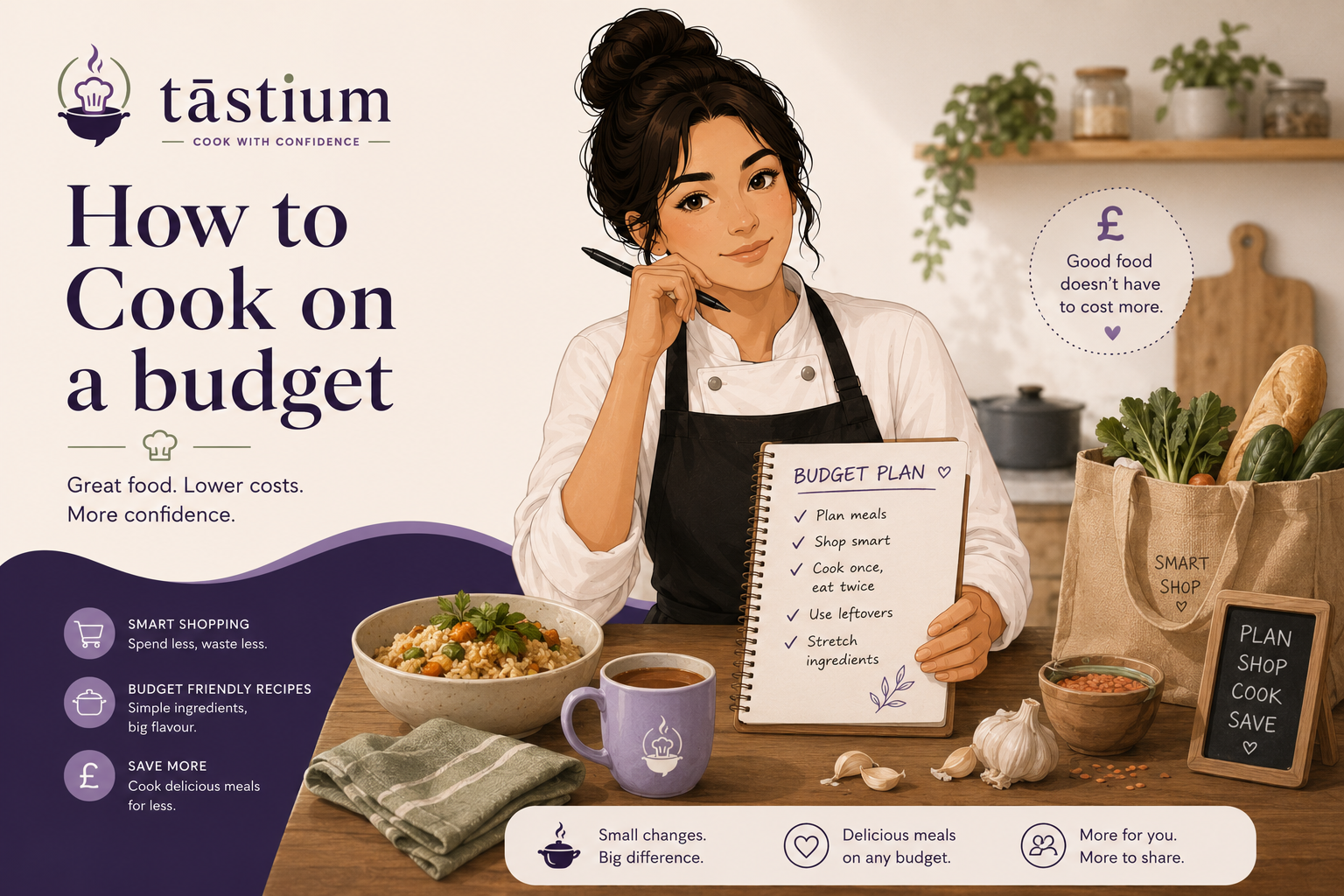
To cook well on a budget, spend your money on a small set of versatile staples rather than expensive one-off ingredients. Build meals around cheap, filling bases such as pulses, grains, eggs and seasonal vegetables; treat meat as a flavouring rather than the centrepiece; cook from scratch where it genuinely saves money; and cook in batches so good food is always within reach. Eating well for less is far more about technique and habit than about how much you spend.
There is a persistent myth that good food is expensive food. Spend an afternoon with a great cook on a tight budget and you’ll see how wrong that is. Some of the most loved dishes in the world - dal, ribollita, congee, refried beans, a proper bowl of pasta e fagioli - were invented by people cooking thriftily, turning humble ingredients into something genuinely brilliant.
Budget cooking isn’t about depriving yourself. It’s about getting more flavour, more nourishment and more satisfaction out of every pound you spend. This guide covers the principles, the ingredients and the habits that make that possible - and links out to deeper guides on each as you go.
Why cooking on a budget is a skill, not a sacrifice
Expensive cooking often leans on the ingredients to do the work: a good steak needs little more than salt and a hot pan. Budget cooking asks more of the cook, and rewards them for it. You learn to build flavour with aromatics, spice, acid and time rather than with price tags. You learn which cheap ingredients punch above their weight, and how to coax the most out of them.
Those skills compound. Once you know how to turn a bag of dried chickpeas into three different meals, or how to make a slow-cooked cheap cut taste extravagant, your food bill stops feeling like a constraint and starts feeling like a creative brief. The goal of this guide is to get you there.
The tāstium budget cooking framework
Everything that follows hangs off five principles. Get these right and the savings look after themselves.
Five principles of cooking well for less
- Stock smart. Keep a small, versatile storecupboard that turns “nothing in” into dinner.
- Buy on value, not habit. Compare unit prices, lean on frozen and own-brand, and shop the markdowns.
- Cook from scratch - selectively. Make the things that save real money; buy the things that don’t.
- Stretch your proteins. Treat meat as a seasoning and let cheaper proteins lead.
- Cook in batches. Cook once, eat several times, and let the freezer do the saving.
Build a budget storecupboard
A good storecupboard is the single best investment a budget cook can make. When the cupboard is well stocked, you’re never more than a few fresh ingredients away from a proper meal, and you stop reaching for expensive convenience food on tired evenings.
The essentials are cheap and they keep for months: dried and tinned pulses, rice and pasta, tinned tomatoes, stock, onions and garlic, a few core spices, oil, vinegar and a little something for depth such as soy sauce or tomato purée. These are the ingredients that turn odds and ends into dinner. We cover exactly what to buy, and how to use it, in our guide to the budget storecupboard staples that stretch every meal.
The cheap ingredients that deliver the most
Some ingredients are quietly heroic: cheap, filling, nutritious and endlessly adaptable. If you build your week around these, the savings are dramatic.
- Pulses - lentils, chickpeas and beans are protein-rich, filling and cost pennies per portion, especially dried.
- Eggs - one of the best-value proteins there is, and the basis of dozens of fast, cheap meals.
- Rice, pasta and other grains - the affordable backbone of most cuisines.
- Onions, carrots and celery - the cheap aromatic base that gives soups, stews and sauces their depth.
- Tinned tomatoes - the start of countless sauces, stews and soups.
- Potatoes and root vegetables - filling, versatile and usually the cheapest veg on the shelf.
- Frozen vegetables - as nutritious as fresh, often cheaper, and there’s no waste.
None of these are exciting on their own. The skill - and the fun - is in what you do with them.
Choose affordable proteins that don’t compromise on taste
Protein is usually the most expensive part of a meal, so it’s where the biggest savings live. The trick is twofold: lean on naturally cheap proteins, and use more expensive ones sparingly, as a flavouring rather than the main event.
Eggs, pulses and tinned fish are outstanding value. Among meat, cheaper cuts - chicken thighs over breasts, shoulder over loin, mince, and slow-cooking cuts like brisket or shin - deliver more flavour for less money, provided you cook them properly. A little bacon or chorizo can season a whole pot of beans. We go through the best options, and how to cook them well, in affordable protein: how to eat well without pricey meat.
Treat meat as a seasoning, not the centrepiece, and your food bill quietly halves.
Cook from scratch - where it actually saves money
Cooking from scratch is one of the most reliable ways to cut costs, because you’re paying for ingredients rather than convenience and packaging. A homemade tomato sauce, a pot of soup, a tray of flapjacks or a loaf of bread all cost a fraction of their shop-bought equivalents.
That said, “from scratch” isn’t a moral test. Some shortcuts are worth the money - a tin of beans, ready-rolled pastry, frozen veg - because the time saved matters more than the few pence. The skill is knowing which is which. Make the things that save real money and bring real pleasure; buy the things that don’t. Pre-chopped vegetables, grated cheese and individual portions almost always carry a premium worth avoiding.
Batch cooking: the budget multiplier
Cooking in bulk is where budget cooking and convenience meet. The effort of cooking a large pot of chilli, dal, ragu or soup is barely more than cooking a small one, but it produces several meals. Buying ingredients in larger, better-value quantities and turning them into portions for the freezer slashes both cost and the temptation of a late-night takeaway.
Done well, batch cooking gives you a freezer full of meals that cost less than a meal deal each. We cover the techniques, the best dishes to scale up and how to avoid eating the same thing five days running in batch cooking on a budget.
Eat with the seasons to spend less
Seasonal produce is cheaper for a simple reason: when something is in glut, it’s abundant, local and inexpensive. A punnet of strawberries in June or a sack of squash in October costs a fraction of the same thing out of season - and it tastes considerably better, too.
Learning the rhythm of the seasons is one of the easiest ways to eat better and spend less at the same time. It also nudges you towards variety across the year rather than the same tired ingredients on repeat. There’s a month-by-month steer in how seasonal eating saves money.
Shop for value, not out of habit
A surprising amount of money leaks at the supermarket through habit rather than need. Branded goods where own-brand would do, the wrong pack size, full price on something that’s about to be reduced, the eye-level shelf instead of the cheaper one below.
A few simple tactics make a real difference: compare the price per kilo or per litre rather than the headline price, lean on frozen and tinned where quality allows, buy loose to take exactly what you need, and learn when your local shop marks down its fresh food. None of this requires coupons or extreme frugality - just paying attention. We’ve gathered the most effective tactics in how to cut your grocery bill without eating worse.
Budget meals that still feel generous
The proof of all this is on the plate. Cheap cooking at its best doesn’t feel like cheap cooking at all: a fragrant dal with rice and a tangle of fried onions, a deeply savoury bean stew, a proper bowl of pasta with a sauce that’s been allowed to cook down slowly. These are meals you’d be happy to serve anyone.
The common thread is generosity with flavour rather than with money: aromatics cooked properly, spices toasted, sauces reduced, a finishing hit of acid or fresh herbs. For a starting line-up, see our cheap meals that don’t taste cheap.
Common budget cooking mistakes
A few habits quietly undermine even the best intentions:
- Buying cheap but un-versatile ingredients that only work in one dish and then languish in the cupboard.
- Under-seasoning. Cheap ingredients need confident seasoning - salt, acid, spice - to shine. Bland food is the real false economy.
- Skipping the storecupboard. Without a stocked cupboard, you fall back on expensive convenience food exactly when you’re most tired.
- Wasting what you buy. The cheapest ingredient is the one you actually use. Throwing food away is the same as throwing money away.
- Confusing cheap with joyless. A budget should make you more creative, not more miserable. Build in the small pleasures that keep you cooking.
In summary
Cooking well on a budget is a skill, and like any skill it gets easier and more enjoyable with practice. Stock a smart cupboard, buy on value, cook from scratch where it counts, stretch your proteins, cook in batches and eat with the seasons. Do that consistently and you’ll spend less, waste less and - crucially - eat a great deal better than the price of your shopping would suggest.
Frequently asked questions
Build meals around cheap, filling staples such as pulses, eggs, rice, pasta and seasonal vegetables, and use meat sparingly as a flavouring. Keep a well-stocked storecupboard, cook in batches and season confidently. Most of eating well for less is technique and habit, not spending power.
Dried and tinned pulses, eggs, oats, rice, frozen vegetables, tinned fish, potatoes and seasonal produce are all inexpensive, nutritious and versatile. They form the backbone of affordable, balanced cooking.
Usually, yes, because you pay for ingredients rather than convenience and packaging. But not every shortcut is worth avoiding - tinned beans, frozen veg and ready-rolled pastry can be good value. Cook from scratch where it saves real money and buy the shortcuts that don’t cost much.
Build flavour with aromatics, spice, acid and time rather than expensive ingredients. Cook onions and garlic properly, toast your spices, let sauces reduce and finish dishes with something fresh or sharp. Confident seasoning is what separates great budget food from bland budget food.
Dried pulses, eggs and tinned fish are among the best-value proteins available. If you eat meat, cheaper cuts such as chicken thighs, mince and slow-cooking joints give far more flavour per pound than premium cuts.