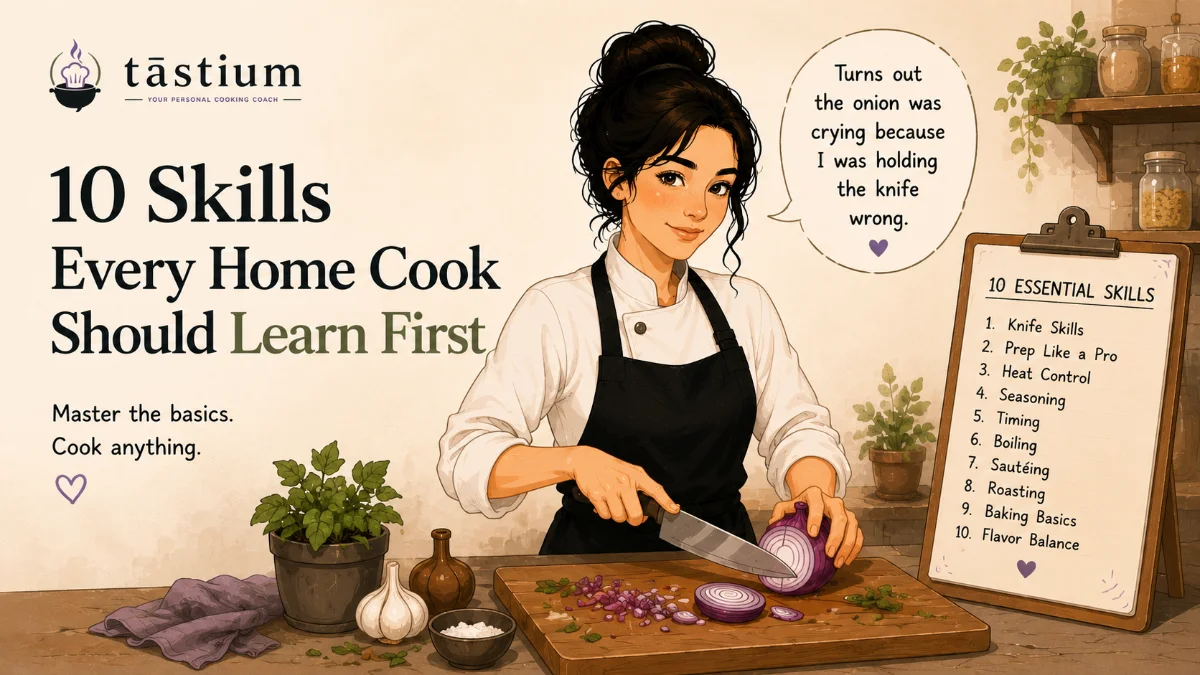
Beginners should learn the skills that appear in many meals: knife skills, heat control, seasoning, boiling, frying, roasting, timing, tasting, food safety and cleaning as you go. These matter more than memorising individual recipes because they transfer across breakfast, lunch, dinner and batch cooking.
This list is the practical companion to our pillar guide, how to learn to cook. Work through it in roughly this order - each skill makes the next one easier.
1. Knife skills
Knife skills make cooking faster, safer and calmer. Learn how to hold a knife, keep fingertips tucked away, cut ingredients into similar sizes and use a stable chopping board. Start with onions, carrots, peppers and herbs because they appear in so many meals.
2. Heat control
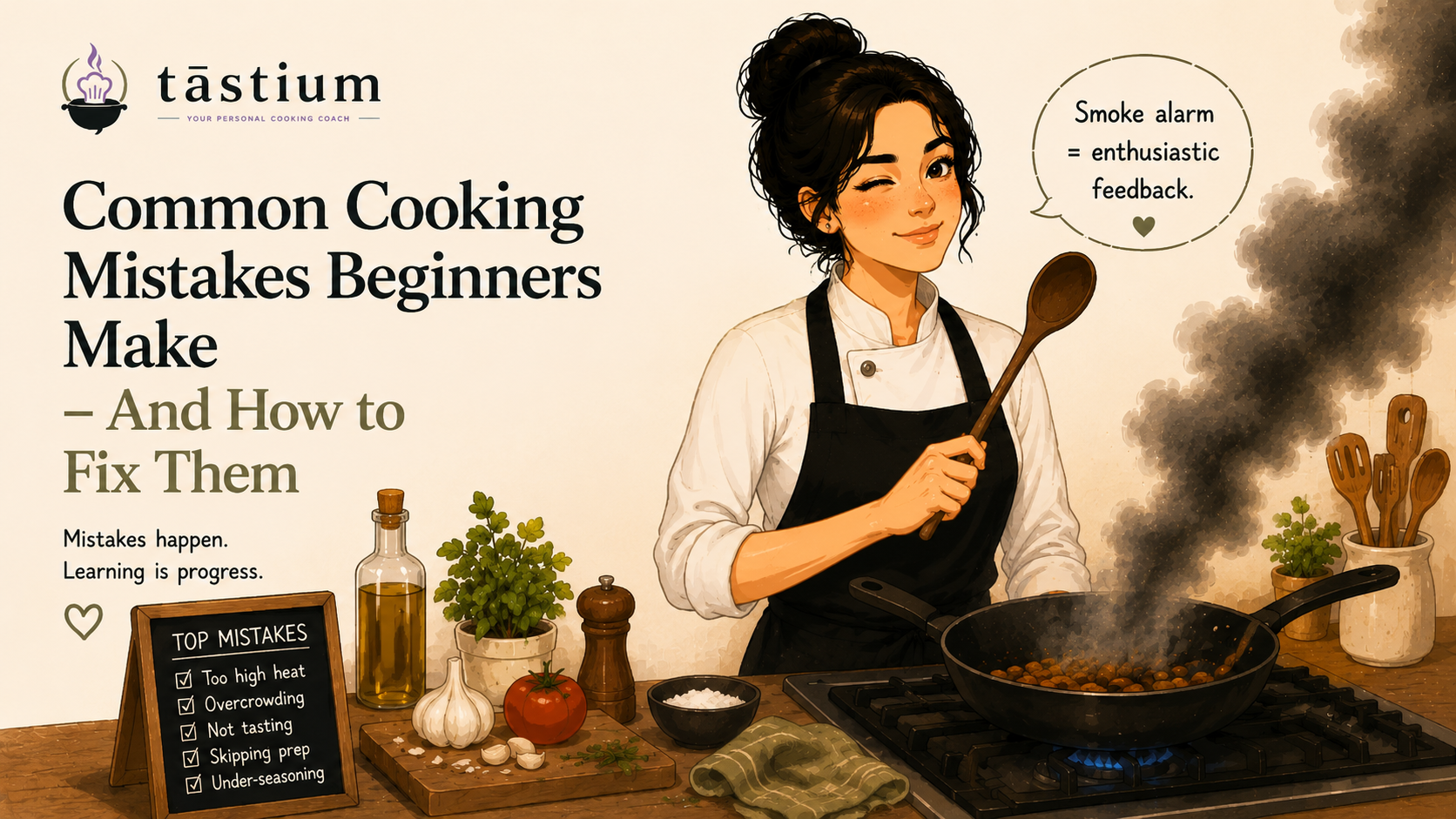
Heat control is one of the biggest differences between stressful cooking and confident cooking. High heat is useful for searing and quick stir frying, medium heat works for most everyday cooking, and low heat is best for gentle cooking, sauces and eggs. Beginners often cook everything too hot, which leads to burning the outside before the inside is ready.
3. Seasoning
Seasoning is not just adding salt at the end. It means building flavour throughout the cooking process. Salt, pepper, herbs, spices, lemon juice, vinegar and a little sweetness can all change a dish. The most important habit is tasting as you cook.
4. Boiling and simmering
Boiling is useful for pasta, potatoes and some vegetables. Simmering is gentler and better for sauces, soups, stews and curries. Learn the visual difference: boiling bubbles are vigorous, while simmering bubbles are smaller and steadier.
5. Frying and sautéing
Sautéing means cooking food quickly in a little oil or fat. It is used for onions, garlic, vegetables, meat and many sauces. The key is to preheat the pan, avoid overcrowding and stir enough to prevent burning without moving the food constantly.
6. Roasting
Roasting is one of the easiest beginner techniques because the oven does much of the work. Vegetables, chicken, fish and potatoes can all be roasted. Cut ingredients evenly, give them space on the tray and turn them halfway through if needed.
7. Timing
Timing improves when you prepare ingredients before cooking. This is sometimes called “mise en place”, but you can simply think of it as getting ready first. Chop, measure and open packets before the pan is hot.
8. Tasting and adjusting
Confident cooks taste throughout the process. If food tastes flat, it may need salt, acid, sweetness, fat or more cooking time. Make one adjustment at a time so you understand what changed.
9. Food safety
Food safety includes washing hands, avoiding cross-contamination, cooking meat properly, cooling leftovers quickly and reheating food until piping hot. Confidence in food safety removes a lot of beginner anxiety.
10. Cleaning as you go
Cleaning as you go makes cooking feel less chaotic. Put packaging in the bin, wipe surfaces and wash utensils while food simmers or roasts. A tidy kitchen makes the next meal easier to start.
Once these become familiar, recipes feel less like instructions to survive and more like ideas you can understand, adapt and enjoy.
In summary
These ten skills form the foundation of home cooking. They reduce uncertainty, which is the real barrier for most beginners. If you can chop safely, control heat and taste for seasoning, you can already cook far more than you realise - and avoid the most common beginner mistakes along the way.
Frequently asked questions
Heat control is often the most important because it affects almost every meal. Many beginner mistakes happen because the pan or oven is too hot or too cold.
Beginners should learn both, but techniques should come first. A small number of simple recipes can teach core techniques that transfer to many other dishes.
Use affordable ingredients such as eggs, pasta, rice, onions, potatoes, carrots and tinned tomatoes. These allow plenty of practice without wasting expensive food.