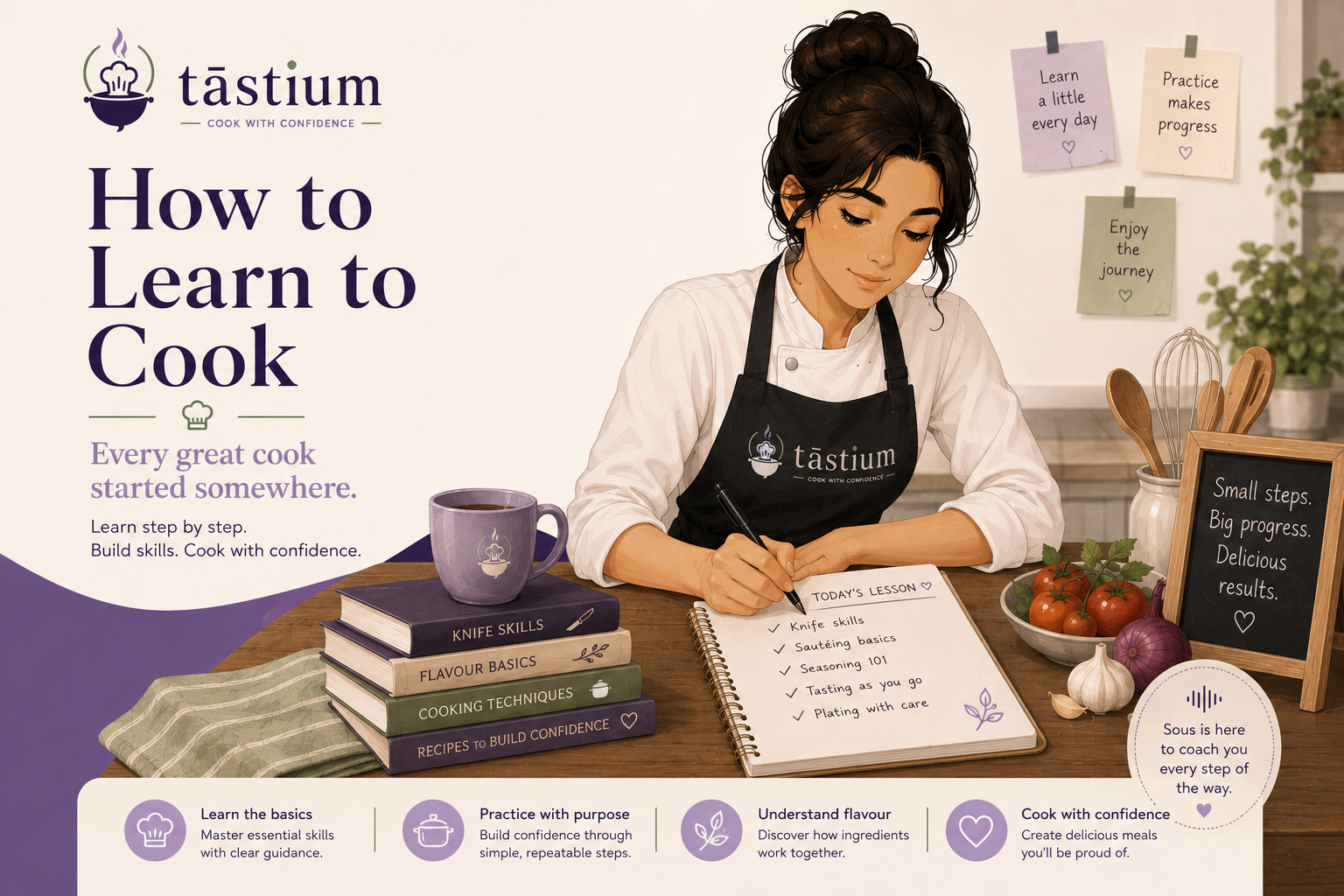
The best way to learn to cook is not to start with complicated recipes. It’s to learn a small set of repeatable skills, practise them in simple meals, get feedback, and gradually build confidence. Start with five foundations: knife skills, heat control, seasoning, timing, and knowing when food is cooked. Once those are in place, recipes become far easier to follow and adapt.
This matters because most people who struggle with cooking are not lazy or incapable. They are usually missing a system. Recipes often assume knowledge that beginners do not yet have. They say things like “sauté until softened”, “season to taste”, or “cook until golden” without explaining what that looks, smells or feels like. That gap is where confidence disappears.
The message of this guide is simple: anyone can become a confident home cook if the learning path is clear enough. Cooking is a learnable life skill, not a personality trait.
Why learning to cook feels harder than it should
Cooking can feel intimidating because it combines several small decisions at once. You are reading instructions, preparing ingredients, watching the heat, timing different parts of the meal and trying not to overcook anything. For someone experienced, those decisions feel automatic. For a beginner, they can feel overwhelming.
The problem is not that cooking is too difficult. The problem is that most cooking content is built for people who already know the basics. Traditional recipes are useful once you understand cooking language, but they are often poor teachers. Video tutorials help, but they can be hard to follow in real time because you cannot always pause, rewind, wash your hands and keep up with the pan at the same time.
A better approach is to separate learning into stages. Instead of trying to cook everything at once, beginners should build capability in layers.
The tāstium 5-stage path to cooking confidence
A simple framework makes the whole journey less daunting. Everything in this guide hangs off five stages - each one building on the last.
From first chop to cooking for others
- Start. Learn kitchen basics and simple safety.
- Follow. Cook simple recipes with clear guidance.
- Understand. Learn why each step matters.
- Adapt. Change ingredients, flavours and timings with confidence.
- Share. Cook for others and build pride through progress.
Stage 1: Start with kitchen basics
A beginner does not need every gadget or every spice. A sharp knife, chopping board, saucepan, frying pan, baking tray, wooden spoon, measuring jug and a few storage containers are enough to begin. The first goal is not to create impressive food. It is to feel safe and calm in the kitchen.
At this stage, learn how to hold a knife, chop an onion, boil pasta, cook rice, crack an egg, use the oven, drain food safely and clean as you go. These basics remove friction. Once they feel normal, cooking becomes less stressful.
Stage 2: Follow simple recipes
The best beginner recipes are short, forgiving and repeatable. Good examples include tomato pasta, stir fry, chilli, traybake chicken, omelettes, baked potatoes, curry with rice, soup and simple tacos. These meals teach transferable skills without requiring perfection.
A useful rule is to start with recipes that have fewer than ten ingredients and no more than six main steps. Beginners should cook the same meal more than once. Repetition is not boring at this stage; it is how confidence forms.
Stage 3: Understand the why behind each step
This is where real learning begins. A recipe may tell you to brown meat, but the skill is understanding that browning adds flavour. A recipe may tell you to salt pasta water, but the skill is understanding that seasoning needs to happen throughout cooking, not only at the end.
When beginners understand why a step matters, they stop feeling dependent on exact instructions. They begin to make better decisions in the moment.
Stage 4: Adapt recipes
A confident cook can look at what is in the fridge and make sensible changes. If a recipe calls for spinach, they know kale or peas may also work. If a sauce tastes flat, they know it might need salt, acid, sweetness or more time. If a pan is too hot, they turn it down before the food burns.
Adaptation is not advanced cooking. It is the sign that someone is beginning to understand food.
Stage 5: Share your progress
Cooking becomes more motivating when progress is visible. Sharing a dish with family, friends or a community turns cooking from a private chore into a source of pride. This is exactly the loop tāstium is built around - progress, feedback and dishes worth talking about.
The first skills every beginner should learn
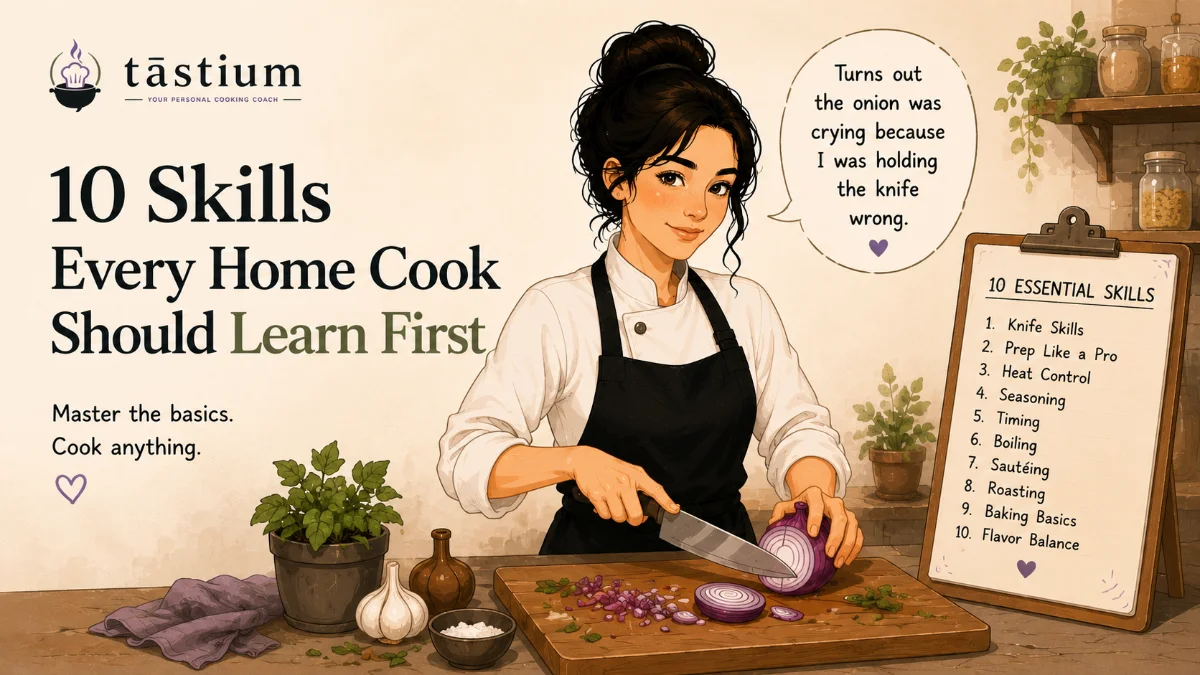
If someone wants to learn to cook quickly, they should not start by collecting recipes. They should start with core skills that appear in hundreds of meals. We cover all ten in detail in 10 skills every home cook should learn first, but here are the essentials:
- Chopping: onions, garlic, peppers, carrots and herbs.
- Heat control: knowing when to use low, medium or high heat.
- Seasoning: using salt, pepper, herbs, spices, acid and sweetness.
- Timing: preparing ingredients before the pan gets too hot.
- Texture: learning the difference between soft, crisp, browned, tender and overcooked.
- Food safety: cooking meat properly, avoiding cross-contamination and storing leftovers safely.
- Tasting: checking flavour as food develops rather than waiting until the end.
These skills make the biggest difference because they reduce uncertainty. A beginner who can chop safely, control heat and taste for seasoning can cook far more than they realise.
The easiest meals to start with
The best first meals are flexible and forgiving. They should still taste good even if the timing is not perfect. Avoid high-pressure dishes like soufflés, risotto, pastry or anything that needs several pans finishing at exactly the same moment.
- Tomato pasta: teaches boiling, sauce-making and seasoning.
- Stir fry: teaches chopping, heat control and timing.
- Traybake chicken and vegetables: teaches oven cooking and doneness.
- Chilli: teaches browning, simmering and batch cooking.
- Omelette or scrambled eggs: teaches gentle heat and texture.
- Soup: teaches chopping, simmering and blending flavours.
- Tacos or wraps: teaches assembly, flavour balance and customisation.
How to practise without getting overwhelmed
The fastest route to confidence is a small weekly routine. Choose one recipe, cook it twice, then make one small change the third time. For example, cook tomato pasta once exactly as written, cook it again with more attention to seasoning, then cook it a third time with chilli, basil or added vegetables.
This creates a learning loop: cook, notice, adjust, repeat. That loop is more effective than jumping between unrelated recipes because the brain recognises patterns. You begin to understand how onions soften, how garlic can burn, how sauce thickens and how pasta changes texture.
Every meal should teach a skill, not just produce dinner.
A simple 30-day beginner cooking plan
A 30-day plan gives beginners structure without making cooking feel like school.
Week 1: Get comfortable
- Cook pasta with a simple sauce.
- Make scrambled eggs or an omelette.
- Roast vegetables on a tray.
- Practise chopping onions, peppers and carrots.
Week 2: Build basic meals
- Cook a stir fry.
- Make chilli or a simple curry.
- Cook rice and pasta confidently.
- Learn to taste and adjust seasoning.
Week 3: Repeat and improve
- Repeat two meals from the first two weeks.
- Change one ingredient or flavour.
- Focus on timing and cleaning as you go.
- Save leftovers safely.
Week 4: Cook for someone else
- Choose one reliable dish.
- Prepare ingredients before cooking.
- Serve it to family or a friend.
- Reflect on what went well and what you would change next time.
By the end of 30 days, the goal is not mastery. The goal is to feel less dependent on takeaways, ready meals and panic cooking. Wondering whether that’s realistic? We answer it properly in how long does it take to learn cooking?
Why confidence matters more than talent
Cooking is often presented as something people are naturally good or bad at. That is misleading. Most confident cooks are not naturally gifted; they have simply repeated basic skills often enough that they feel familiar.
Confidence grows through small wins. A beginner who successfully cooks one meal is more likely to cook another. A beginner who receives feedback and encouragement is more likely to keep going. That is why a coaching-led experience can be more powerful than a recipe database - and why so many people quietly quit. If you’ve tried and stalled before, read why most people give up learning to cook - and how not to and the beginner’s guide to cooking with confidence.
How tāstium helps beginners learn to cook
tāstium is a personal cooking coach rather than another recipe app. The difference matters. A recipe app gives instructions. A cooking coach helps you improve.
For beginners, the most valuable promises are audible step-by-step guidance, simple progression, feedback after cooking, skill tracking and social sharing - each one aimed directly at the barriers beginners face: uncertainty, overwhelm and lack of feedback. The strongest version of that promise is simple: tāstium helps you learn to cook by guiding you through real meals, building your confidence and showing your progress over time.
In summary
Learning to cook is not about memorising recipes. It is about building a small set of repeatable skills and using them often enough that they become familiar. Beginners should start with simple meals, repeat them, understand the reason behind each step and gradually adapt recipes with confidence.
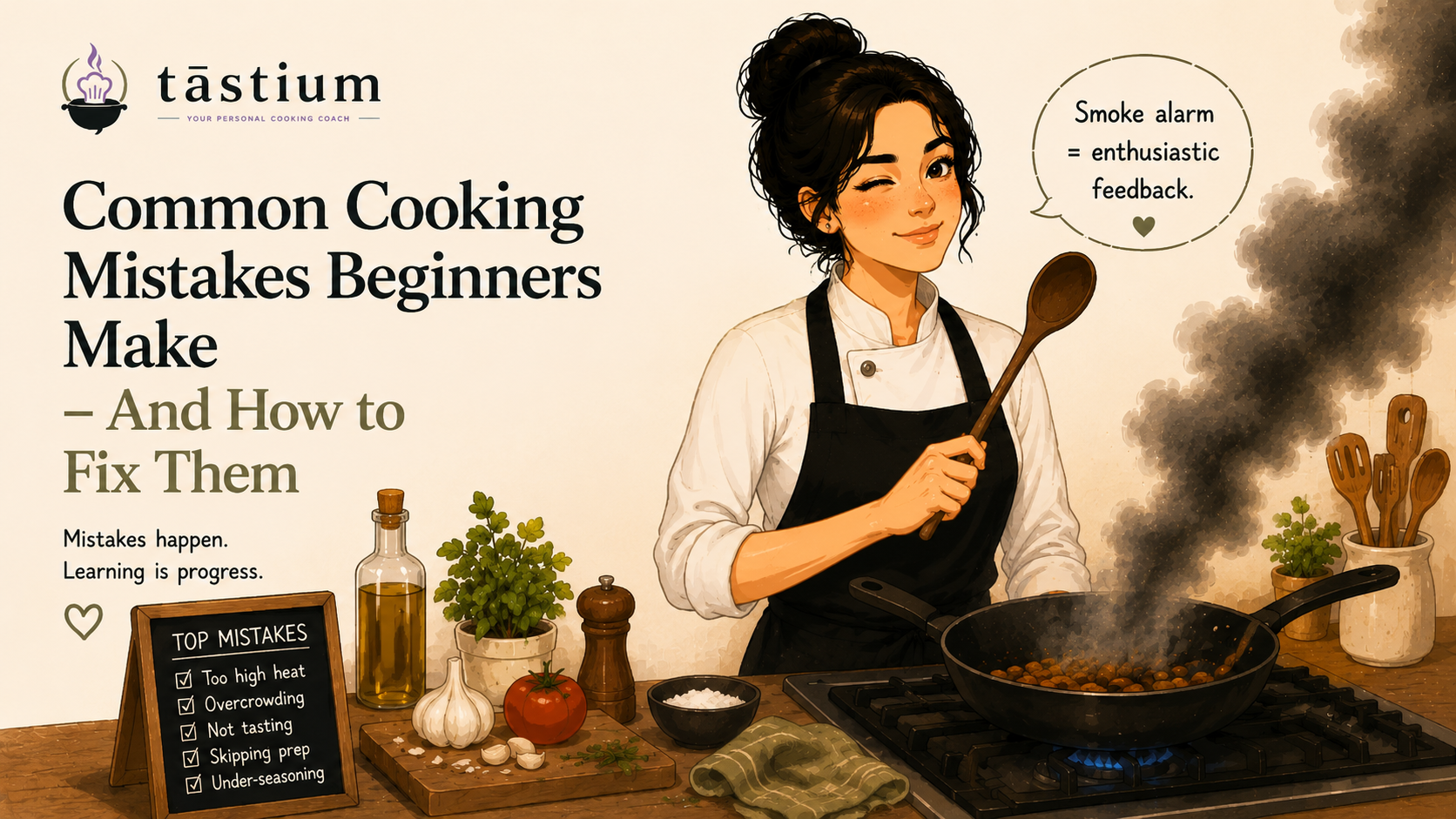
Once cooking becomes less intimidating, the benefits compound: lower food bills, healthier meals, more independence and the pride of creating something worth sharing. The most common stumbles along the way are worth knowing in advance - see common cooking mistakes beginners make.
Frequently asked questions
The best way is to start with simple, repeatable meals and focus on basic skills such as chopping, heat control, seasoning and timing. Repeating a few easy dishes is more effective than trying lots of complicated recipes.
Most beginners can become comfortable with basic cooking in 30 days if they practise several times a week. Becoming truly confident usually takes a few months of regular cooking.
Good first meals include tomato pasta, stir fry, chilli, soup, omelettes, traybakes and tacos. They are flexible, affordable and forgiving if your timing is not perfect.
No. A sharp knife, chopping board, saucepan, frying pan, baking tray and a few basic utensils are enough to begin.
Cooking feels stressful when too many decisions happen at once. Beginners often need clearer guidance, simpler recipes and more practice with basic skills before cooking feels natural.