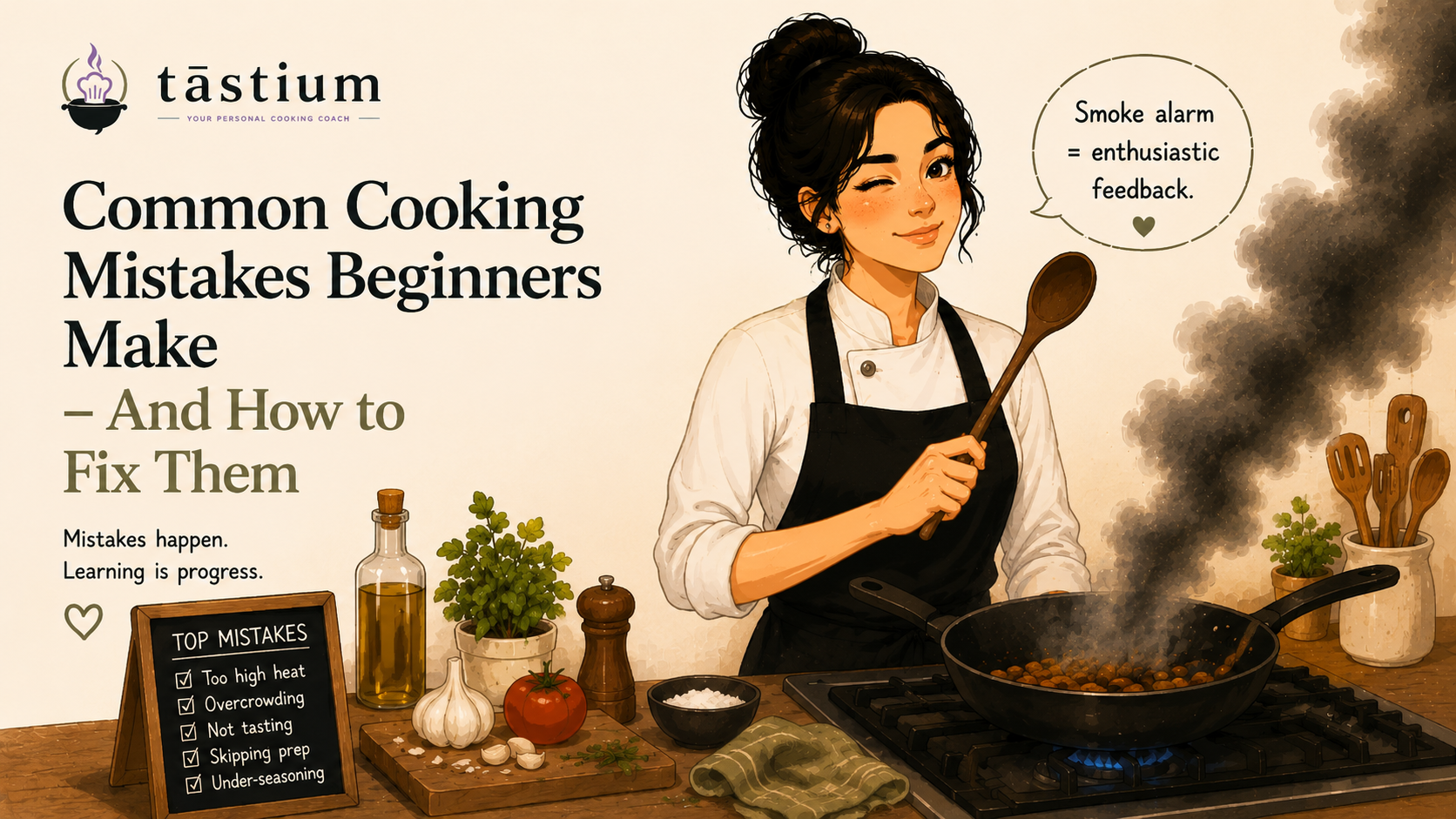
The most common beginner cooking mistakes are using heat that is too high, not reading the recipe first, overcrowding the pan, under-seasoning, not tasting, chopping unevenly, rushing the process and choosing recipes that are too difficult. Most are easy to fix with preparation and practice.
None of these mean you can’t cook - they’re feedback, not verdicts. Here are the ten that catch out almost every beginner, and the simple fix for each. For the wider picture, see how to learn to cook.
Mistake 1: Cooking everything on high heat
High heat feels faster, but it often burns the outside before the inside cooks. Use medium heat for most everyday cooking and lower heat for eggs, sauces and delicate foods.
Mistake 2: Not reading the recipe before starting
Beginners often discover halfway through that something needs chopping, marinating or preheating. Read the recipe once before cooking and prepare ingredients before turning on the heat.
Mistake 3: Overcrowding the pan
When too much food is added to a pan, it steams instead of browning. Use a larger pan or cook in batches. Space helps food develop flavour and texture.
Mistake 4: Under-seasoning
Bland food is usually under-seasoned. Add seasoning gradually and taste as you go. Salt is important, but acid from lemon juice or vinegar can also make flavours brighter.
Mistake 5: Not tasting while cooking
Tasting only at the end removes your chance to adjust. Taste sauces, soups and stews during cooking so you can correct flavour before serving.
Mistake 6: Uneven chopping
If some pieces are large and others tiny, they will cook at different speeds. Try to cut ingredients into similar sizes, especially vegetables and potatoes - one of the core skills every beginner should learn.
Mistake 7: Moving food too much
Food needs contact with the pan to brown. If you stir constantly, colour and flavour may not develop. Let food sit briefly before turning.
Mistake 8: Choosing difficult recipes too soon
A beginner does not need to prove anything. Choose recipes with simple steps and familiar ingredients. Build skill before complexity.
Mistake 9: Ignoring rest time
Some foods, especially meat, improve when rested after cooking. Resting allows juices to settle and makes the final result better.
Mistake 10: Treating mistakes as failure
Every cook makes mistakes. The difference is that confident cooks learn what caused them. A burnt pan, bland sauce or overcooked egg is feedback, not proof that you cannot cook.
A burnt pan, bland sauce or overcooked egg is feedback - not proof that you cannot cook.
In summary
Beginner mistakes are normal and fixable. Most are caused by heat, timing, seasoning or preparation. Once you understand the cause, the same mistake becomes much less likely next time - and your confidence grows with it.
Frequently asked questions
The heat is probably too high, the pan may be too dry, or you may be leaving food unattended for too long. Start with medium heat and adjust gradually.
It may need more salt, acid, herbs, spices or cooking time. Taste during cooking and adjust slowly.
Prepare ingredients before starting, read the recipe first and choose meals with fewer steps until you gain confidence.