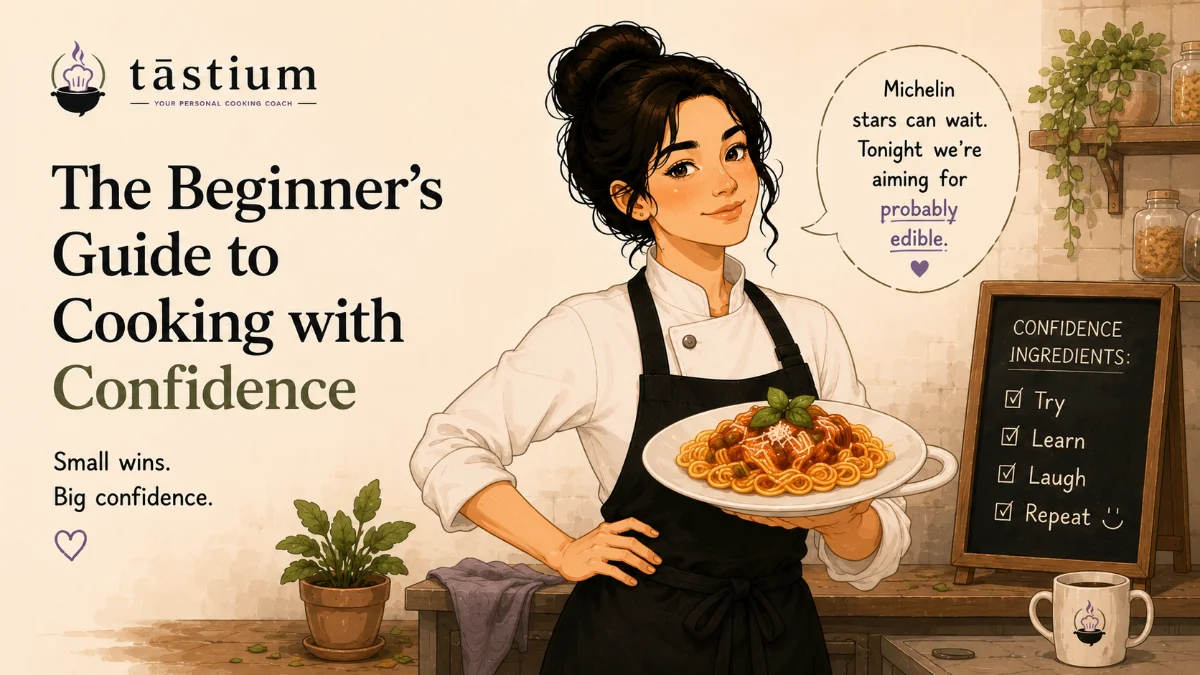
You become confident at cooking by starting small, repeating simple meals, learning from mistakes and building a routine. Confidence does not appear before you cook. It appears after a few successful meals prove that you can do it.
Why confidence is the real beginner problem
Many beginner cooks think they lack skill, but the deeper issue is often fear. They worry about wasting ingredients, undercooking meat, burning food or disappointing other people. This fear makes cooking feel more risky than ordering food or heating a ready meal.
Confidence grows when the risk feels manageable. That means choosing simple meals, using clear instructions and allowing yourself to practise privately before cooking for others. It is the natural next step after the foundations in how to learn to cook.
Start with meals that are hard to ruin
Confidence-building meals should be forgiving. Pasta, traybakes, soups, chilli, tacos and stir fries all allow adjustments. If the sauce is thick, add water. If it is bland, add seasoning. If vegetables are too firm, cook them longer.
Use the three-meal confidence loop
The three-meal confidence loop is simple: cook a dish once to learn it, cook it again to improve it, then cook it a third time with a small change. This turns cooking into progress rather than pressure.
Cook once to learn it. Cook it again to improve it. Cook it a third time to make it yours.
Cook before you are hungry
Trying to learn while tired and hungry makes cooking harder. Practise at lower-pressure times, such as a weekend lunch or earlier in the evening. Hunger increases impatience, and impatience creates mistakes.
Prepare before the heat goes on
One of the easiest ways to feel calmer is to prepare ingredients before cooking. Chop vegetables, measure spices, open tins and read the recipe through once before starting. This removes the feeling of racing against the pan.
Learn how to recover from common mistakes
Confidence increases when you know mistakes are fixable. Food too salty can sometimes be balanced with more unsalted ingredients. Sauce too thick can be loosened with water or stock. Food sticking to the pan may need lower heat, more fat or patience before turning. We cover the full set in common cooking mistakes beginners make.
Celebrate small wins
Notice your progress: chopping faster, seasoning better, burning less, timing a meal more smoothly or serving something you are proud of. These wins matter because they create motivation to continue - and they’re the reason people who track progress are far less likely to give up learning to cook.
In summary
Cooking confidence is built through small, repeatable successes. The goal is not to become a perfect cook immediately. The goal is to feel capable enough to cook again tomorrow.
Frequently asked questions
Start with simple, low-risk meals and practise when you are not under pressure. Confidence grows through repeated success, not by forcing yourself into difficult recipes.
Treat it as information. Ask what happened: was the heat too high, did it need more seasoning, or were the instructions unclear? One failed meal does not mean you cannot cook.
Yes. Cooking confidence is built through preparation, repetition, feedback and small wins. It is not something you either have or do not have.