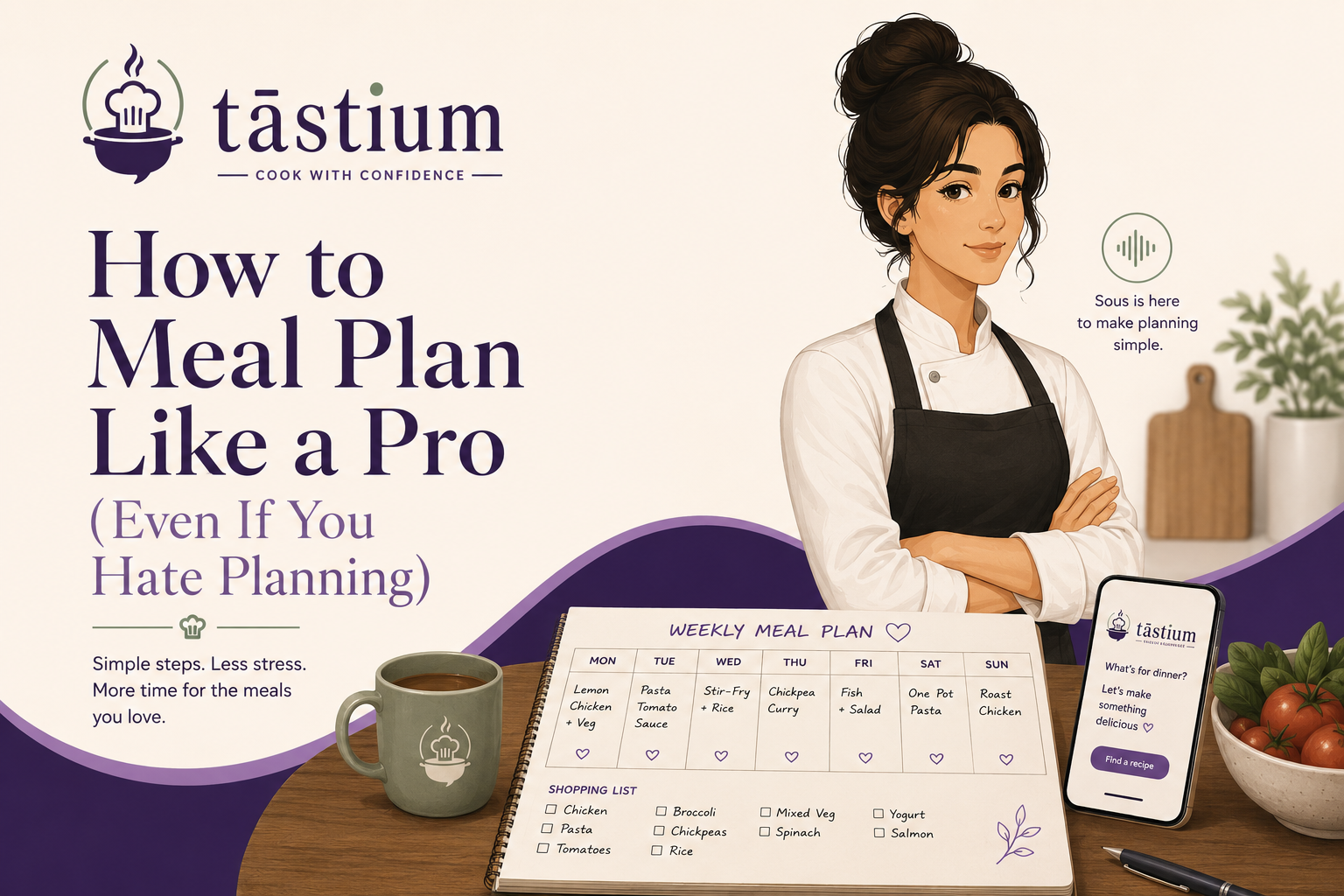
Meal planning is deciding in advance what you will cook during the week. Meal prep is preparing some or all of that food in advance. They are related but distinct: you can meal plan without meal prepping, and you can meal prep without a plan - though combining both produces the most practical results.
If you’re new to both, this sits alongside our pillar guide, how to meal plan.
What is meal planning?
Meal planning is a weekly decision-making process. You choose which meals you will cook, build a shopping list based on those meals, and use that list to shop. The planning happens before any cooking takes place.
It reduces daily decision fatigue, lowers grocery bills, decreases food waste and makes weeknight cooking feel less rushed. It does not require any advance cooking.
What is meal prep?
Meal prep is preparing food in advance to make cooking faster and easier later in the week. This could mean chopping vegetables on a Sunday, cooking a batch of rice or grains, preparing a sauce, marinating protein, or fully cooking several complete meals. It works best when it targets the tasks that take the most time or create the most friction on a busy weeknight.
How they work together
Meal planning and meal prep complement each other. A plan tells you what you’ll cook; prep makes cooking those meals easier. Together they reduce both the mental effort of deciding and the physical effort of preparing.
Plan five or six meals at the weekend, shop, then spend 20–30 minutes on basic prep. The week becomes far easier to manage.
Which should beginners start with?
Beginners should start with meal planning. It requires no extra cooking time and delivers immediate benefits: lower stress, lower cost and less food waste. Meal prep can be added gradually once the planning habit is established. Starting with both at once can feel overwhelming - master the weekly plan first, perhaps with our 30-minute routine.
Common meal prep mistakes to avoid
Prepping too much is a common early mistake. Making five complete meals in advance sounds efficient but often leads to boredom or waste if plans change. Moderate prep is more sustainable than full prep for most people.
Prepping foods that don’t store well is another. Dressed salads, freshly cooked fish and some stir-fried dishes don’t benefit from being made in advance. Focus prep on components that store and reheat well: grains, legumes, roasted vegetables, sauces and soups.
Meal prep ideas for beginners
- Wash and chop vegetables for use across multiple meals.
- Cook a large batch of rice or grains such as quinoa or barley.
- Make a base sauce (tomato, curry or white sauce) for use in different dishes.
- Marinate protein the evening before to improve flavour with no extra effort.
- Portion snacks into containers to reduce unhealthy impulse eating during the week.
- Make a batch of overnight oats or boiled eggs for quick breakfasts.
In summary
Meal planning and meal prep are both useful, but they serve different purposes. Planning decides what to cook. Prep makes cooking easier. Start with planning, add prep once the planning habit is established, and combine both for the most stress-free approach to weeknight cooking.
Frequently asked questions
No. Meal planning alone reduces grocery spending significantly by reducing impulse purchases and food waste. Meal prep is about saving time, not primarily about saving money.
A useful prep session can take as little as 20 to 30 minutes. It does not need to be a full day in the kitchen to make a noticeable difference to the week.
Yes. Batch cooking and advance prep work just as well for individuals as for families. Portion and freeze extras to prevent boredom and waste.