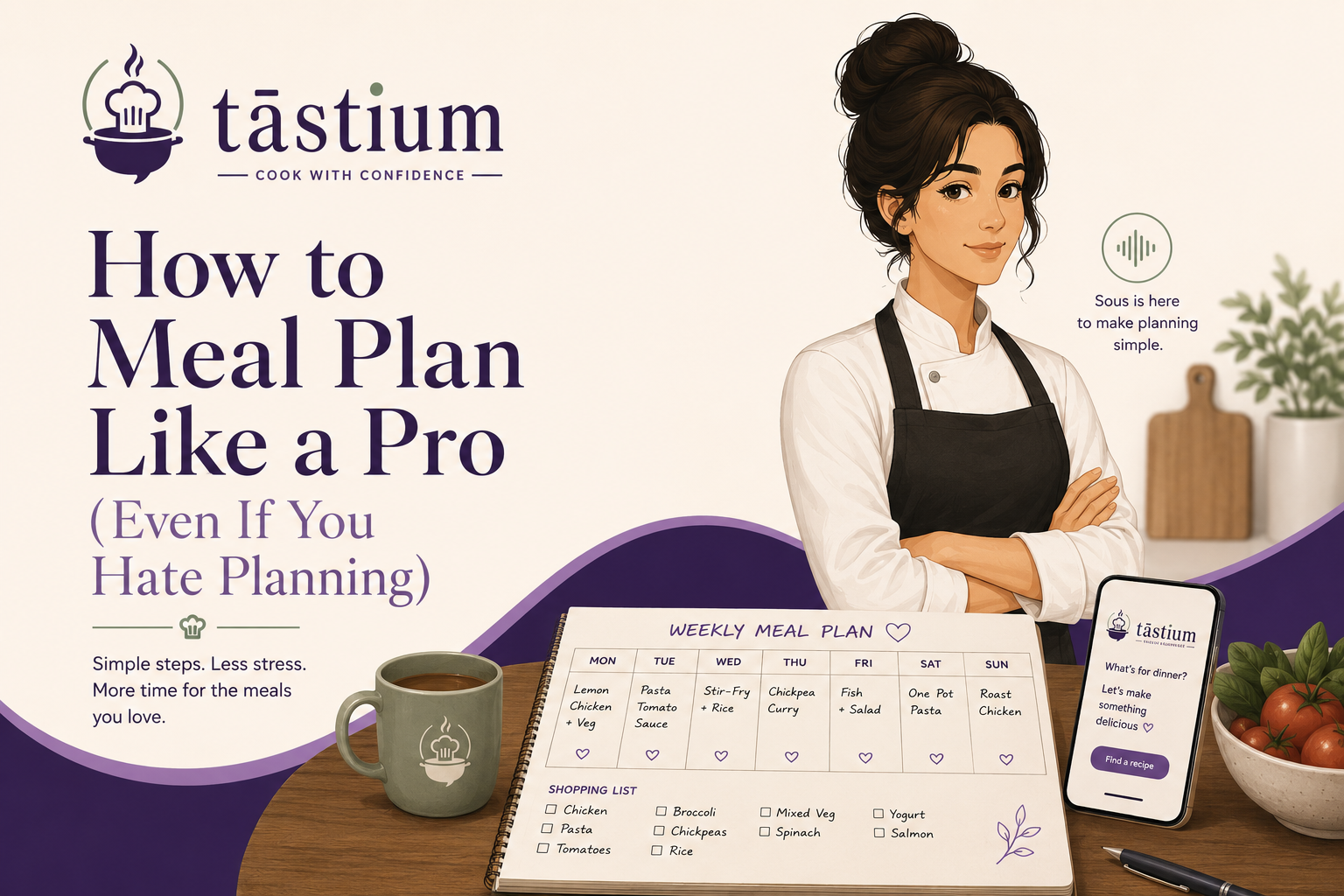
The most effective ways to reduce food waste at home are planning meals before shopping, buying only what you need, storing food correctly, using leftovers creatively and using the freezer as a deliberate tool rather than a last resort. Most household food waste comes from buying without a plan and forgetting what is already in the fridge.
This is the money-saving payoff of the system in our pillar guide, how to meal plan. Each strategy below stacks with the others.
Plan before you shop
A meal plan connected to a shopping list is the single most effective strategy for reducing food waste. When every item you buy is connected to a specific meal, very little goes unused. Without a plan, ingredients are bought on impulse or habit and often expire before use. Even a loose plan - three to five meals with a corresponding list - makes a significant difference. The method is in how to build a shopping list that saves money.
Store food correctly
Many foods go off faster than necessary because of poor storage. Herbs last much longer wrapped in damp kitchen paper in the fridge. Bread stays fresher frozen and toasted as needed rather than going stale on the counter. Hard cheese keeps well wrapped tightly in wax paper or its original packaging. Potatoes and onions last longer stored separately in a cool, dark place rather than the fridge.
First in, first out
When unpacking shopping, move older items to the front of the fridge, freezer or storecupboard and place new items behind them. This is the principle used in professional kitchens and works equally well at home. If older items are visible, they get used first.
Use the freezer as a deliberate tool
A freezer used well dramatically reduces food waste. Bread, meat, fish, dairy, cooked grains, soups and sauces all freeze well. The key is to freeze before food starts to deteriorate rather than as a last-minute rescue.
Label frozen items with the content and date. A freezer of unlabelled containers is a source of waste, not a solution to it.
Plan meals around what needs using
Before planning each week’s meals, check what’s already in the fridge and storecupboard. Build at least one meal around items that need using. This reduces waste, saves money and often produces surprisingly satisfying meals from ingredients that would otherwise be thrown away.
Use leftovers intentionally
Leftovers cooked into a new meal are more appealing than leftovers reheated as yesterday’s dinner. Roast chicken becomes a soup. Cooked rice becomes egg fried rice. Extra pasta sauce becomes a base for shakshuka. Looking at leftovers as ingredients rather than remainders changes how they feel to cook with - and it’s central to cheap family meal plans.
Buy loose where possible
Buying loose produce rather than pre-packaged means you can buy exactly what you need rather than what comes in a bag. Six bananas when you only need three is a common source of waste. Where loose buying is available, it usually reduces waste and often cost as well.
In summary
Reducing food waste doesn’t require a major lifestyle change. Plan meals before shopping, store food correctly, use the freezer intentionally, rotate stock, use leftovers creatively and buy only what you need. These small habits, applied consistently, can halve the average household’s food waste and make a genuine difference to the weekly bill.
Frequently asked questions
Buying ingredients without a plan is the most common cause. When there is no meal attached to an ingredient, it is easy to forget about it until it is too late.
Soups, stir fries and traybakes are all forgiving dishes that use a wide variety of vegetables well. Plan one flexible meal per week specifically to use up whatever needs eating.
Bread, cooked grains, soups, sauces, curries, stews, meat, fish and most cooked legumes all freeze well. Label everything with the date before freezing.
Keep the fridge well organised with older items at the front. Do a brief check before shopping each week to catch anything that needs using.