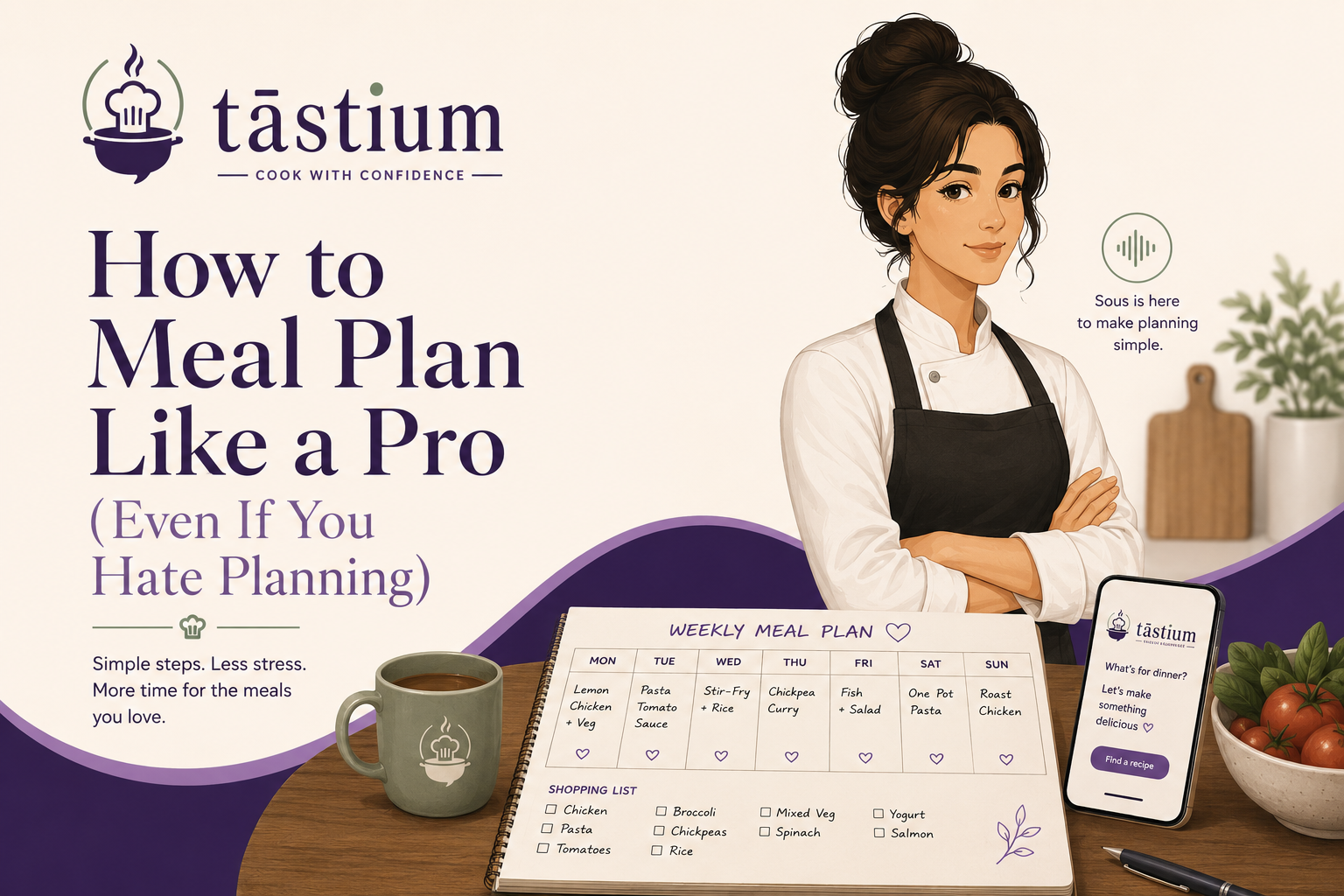
A good shopping list is built from a meal plan, not from memory. It includes only what you need for the meals you have planned, plus a short note of staple items to restock. It is grouped by category to make shopping faster, and it is actually used in-store rather than left at home.
This is the companion to our pillar guide, how to meal plan. The list is where planning turns into saving.
Start with your meal plan
The most effective shopping lists begin with a decision about what you are cooking. Once you know your five to seven meals for the week, list every ingredient required for each one. Then check what you already have and remove those items. What remains is your shopping list.
This takes longer the first few times but becomes faster once you’re familiar with your own cooking patterns. Over time, you begin to know instinctively what you typically have in stock.
Group by category
A list organised by category makes supermarket shopping significantly faster. Suggested categories: fresh vegetables and fruit, fresh protein, dairy and eggs, dry goods and storecupboard, tins and jars, frozen, drinks, and anything non-food.
Grouping also reduces the chance of backtracking across the shop to pick up missed items - a common source of extra impulse purchases.
Maintain a storecupboard restock note
Separately from your weekly meal list, keep a short running list of storecupboard items that are running low or used up. Olive oil, stock, pasta, rice, spices, flour, tinned tomatoes and similar items don’t need buying every week but should be restocked before they run out completely. Checking this list takes two minutes and prevents the frustration of discovering a missing ingredient mid-recipe.
Common shopping list mistakes
- Buying ingredients without a matching meal is the most common way to waste money. A bag of kale that doesn’t connect to any planned meal usually goes unused.
- Shopping when hungry increases impulse purchases. If possible, shop after eating or at least carry a snack.
- Relying on memory is less reliable than a list. Even experienced cooks forget items without one.
- Buying in bulk without a plan can increase waste rather than reduce it. Bulk only saves money if the extra actually gets used.
The list should lead the shop - not the other way around.
Digital versus written lists
Both work. The most effective list is the one you’ll consistently use and take with you. Digital lists on a phone are easy to share with a partner, quick to edit, and can’t be forgotten at home. Written lists are fast to create and useful if you prefer not to use a phone in-store.
Some people keep a permanent digital grocery template organised by category, updated each week with that week’s specific items - removing the work of reorganising the list from scratch each time.
In summary
A list built from a meal plan consistently outperforms one built from memory or habit. Plan meals, extract ingredients, subtract what you have, group by category and stick to the list. Repeat weekly and the saving adds up meaningfully - and pairs perfectly with reducing food waste at home.
Frequently asked questions
Shop with a list built from a meal plan and stick to it. Avoid shopping when hungry. Group your list by category to reduce browsing time.
Use whichever format you will consistently use and actually take with you. Digital lists are easy to share and hard to forget. Written lists are quick to create.
Build the list from your meal plan rather than from memory. Add storecupboard items to a separate running list as you use them up.