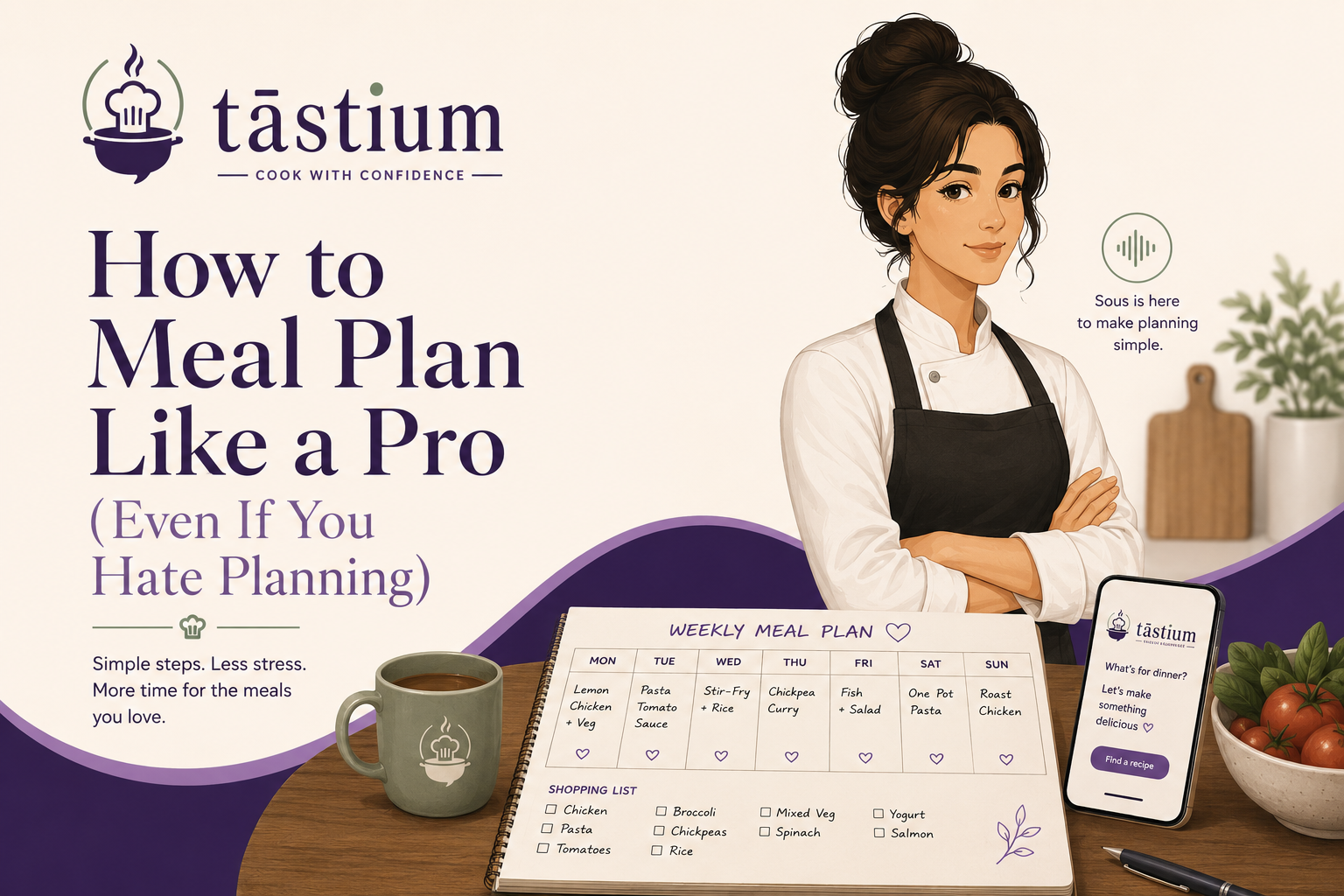
Yes, you can plan a week of meals in 30 minutes. It doesn’t require a detailed spreadsheet or hours of research - just a short routine, a list of familiar meals to choose from, and a shopping list. Most people can complete the whole process in 30 minutes or less once the habit is established.
This is the fast, practical version of our pillar guide, how to meal plan. Split the 30 minutes into four short steps.
The 30-minute weekly meal planning routine
Four steps, thirty minutes
- Check what you have - 5 minutes.
- Choose your meals - 10 minutes.
- Write the shopping list - 10 minutes.
- Schedule loosely - 5 minutes.
Step 1: Check what you already have (5 minutes)
Before choosing meals, scan the fridge, freezer and storecupboard for items that need using. This prevents food waste and often suggests a meal on its own. A bag of wilting spinach, some chicken and a tin of tomatoes is three-quarters of a pasta dish.
Step 2: Choose your meals (10 minutes)
Aim for five to six dinners. Fewer is fine if your week is busy. Pull from a shortlist of meals you already enjoy and know how to cook. Reserve one or two slots for something new if you want variety. Keep at least one meal that is very quick and easy for a low-energy evening.
Step 3: Write the shopping list (10 minutes)
List every ingredient needed for your chosen meals. Cross off what you already have. Group what remains by section: fresh produce, protein, dairy, dry goods, frozen. A grouped list makes shopping faster and reduces the chance of forgetting items. There’s a full method in how to build a shopping list that saves money.
Step 4: Schedule loosely (5 minutes)
Look briefly at your week. If Tuesday will be late, that’s the evening for the quick meal. If Saturday is relaxed, that’s a good evening for something that takes more time. Don’t assign every meal to a specific day - just note the obvious constraints.
What to keep in your weekly planning toolkit
A short list of 10 to 15 meals your household reliably enjoys is one of the most useful planning tools available. When inspiration is low, choose from the list. When you have more time or motivation, add something new. Keep a note of storecupboard staples that need restocking, and check it briefly each week before finalising your list.
Planning for breakfast and lunch
Dinners take the most planning, but leaving breakfast and lunch unplanned increases daily decision fatigue and impulse purchases. A simple approach works well: two or three rotating breakfast options, a go-to lunch format such as salads, wraps or leftovers, and a small stock of easy lunch ingredients.
Planning for families
Families with different preferences benefit from meals with adaptable elements. A taco night with separate fillings, a stir fry where the protein can be swapped, or a pasta dish with the sauce on the side all let household members adjust their plates without separate cooking.
A two-minute chat about what everyone wants to eat this week dramatically increases the chance the plan gets followed.
In summary
Weekly meal planning doesn’t need to be complicated. A 30-minute routine with four clear steps gives most households everything they need to reduce daily stress, save money and cook better meals more consistently. On a tight budget, pair it with our cheap family meal plans.
Frequently asked questions
Set aside 30 minutes on the same day each week, ideally before you shop. Use a short list of favourite meals and build your shopping list from your choices.
Keep a list of 10 to 15 meals your household reliably enjoys. Return to it when inspiration is low. Over time, add new recipes as you discover them.
Planning dinners is the most impactful starting point. Add simple options for breakfast and lunch once dinners feel manageable.