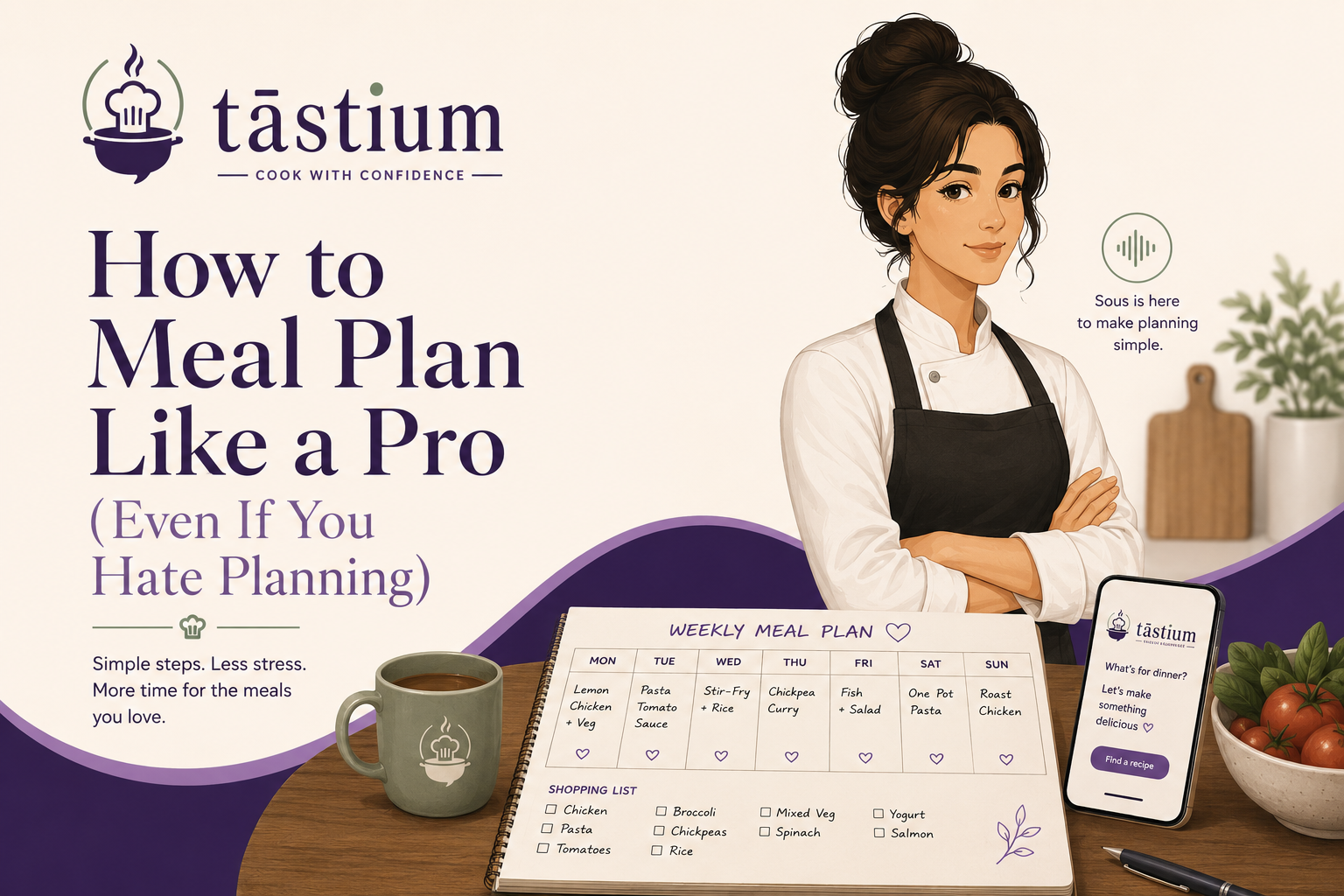
The best way to meal plan is to keep it simple. Choose five to seven meals for the week, build a shopping list from those meals, reuse ingredients across more than one dish, and leave one or two nights flexible. A plan’s purpose is to reduce daily decisions, lower grocery costs and make cooking feel less like a chore.
Most people who struggle with meal planning are not disorganised. They are using a system that is too detailed or too inflexible. A useful plan works around real life, not an ideal version of it. Anyone can meal plan effectively once they have the right system - it’s a practical skill, not a personality trait.
Why meal planning feels harder than it should
Meal planning often feels like effort for two reasons. First, people assume it means deciding every detail of every meal in advance. Second, they build plans around aspirational cooking rather than the meals they actually enjoy and can make quickly.
The result is a plan that falls apart by Wednesday. Ingredients go unused, one busy evening throws the whole week off, and the plan becomes something to feel guilty about rather than something helpful.
A better approach is to plan loosely. Identify the meals you will cook, not the exact days you will cook them. Build in flexibility from the start.
The tāstium 5-step meal planning system
A simple, repeatable framework is what makes planning stick. Everything in this guide hangs off five steps.
Choose, list, shop, prep, adapt
- Choose. Select five to seven meals for the week based on time, budget and what you enjoy.
- List. Build a shopping list directly from those meals.
- Shop. Buy only what you need, using the list.
- Prep. Do a small amount of preparation in advance to make weeknight cooking easier.
- Adapt. Stay flexible. If plans change, move meals around rather than abandoning the plan.
Step 1: Choose your meals
Start by deciding how many meals you need. For most people, five to seven dinners per week, plus simple options for breakfast and lunch, is enough. Don’t plan every meal in detail; focus on dinners because they take the most time and create the most daily stress.
Choose a mix of quick meals (under 30 minutes), batch-cook options (make more than you need) and one or two slightly more involved dishes for when you have more time. Avoid choosing meals that all rely on similar ingredients or techniques - variety makes the week more interesting.
Step 2: Build your shopping list
Once you have your meals, list every ingredient needed. Then check what you already have and remove duplicates. Group the remaining items by category: fresh produce, dairy, meat or protein, storecupboard staples, and frozen items. A grouped list makes shopping faster and reduces the chance of missing items.
Look for ingredient crossover. If one meal uses half a tin of tomatoes, plan another that uses the other half. If you buy a bunch of herbs for one dish, find a second dish that uses the same herbs. We go deeper on this in how to build a shopping list that saves money.
Step 3: Shop with your list
Shopping with a list and sticking to it is one of the most effective ways to reduce the weekly food bill. Impulse purchases and unplanned ingredients are where most food budgets leak. A good list also makes online shopping faster because you know exactly what to search for.
Step 4: Prep in advance
Even 20 to 30 minutes of preparation at the weekend or on a quieter evening makes weeknight cooking noticeably easier. Useful prep tasks include washing and chopping vegetables, cooking a batch of rice or grains, making a sauce in advance, marinating meat, and portioning snacks or lunch ingredients.
The goal is not to cook everything in advance. It’s to remove the friction that makes weeknight cooking feel like hard work. Not sure where prep ends and planning begins? See meal prep vs meal planning.
Step 5: Stay adaptable
The most important part of a sustainable plan is flexibility. If you cook Tuesday’s meal on Thursday, that is not a failed plan - that is a plan working as it should. Move meals rather than abandoning them. Keep one or two low-effort meals in reserve for evenings when energy is low.
How to build a weekly shopping list from your meal plan
A shopping list built from a meal plan is more effective than one built from memory. Start with your chosen meals and extract every ingredient. Then subtract what you already have. Then group by category.
Keep a running list of storecupboard items to restock: olive oil, tinned tomatoes, pasta, rice, stock, spices, flour, and similar essentials. These rarely need buying every week but are easy to forget until you need them. Digital lists work well because they’re easy to edit and share - but a written list on the back of an envelope is equally effective if that’s what you’ll actually use.
Using ingredients across more than one meal
Ingredient reuse is one of the most practical ways to reduce waste and lower costs. A rotisserie chicken can become a weeknight dinner, then a soup, then a sandwich filling. A bunch of spinach can go into a pasta dish, then an omelette. Half a block of cheese can be used in a quesadilla and then a jacket potato.
Build your plan around three or four base ingredients and choose meals that share them.
Meal prep: what to do and what to skip
Meal prep does not mean cooking everything on a Sunday and eating identical containers for five days. For most people, moderate prep makes the biggest difference: chopped vegetables, a cooked grain, a batch of sauce.
The prep worth doing saves real time during the week. Chopping onions takes two minutes, but doing it six times adds up. Cooking a large batch of lentils or rice takes the same effort as a small batch but gives you three meals. The prep to skip is anything that reduces enjoyment - if freshly cooked food matters to you, pre-cooking full meals won’t suit you. Work with your preferences, not against them.
How to make meal planning flexible enough to actually use
A rigid plan rarely survives contact with a real week. The solution is to plan the what, not the when. Know which meals you’re cooking this week; let the days take care of themselves.
Keep a small reserve of quick meals for busy evenings - eggs, pasta with a jar sauce, a tin of soup, anything ready in under 15 minutes. Review the plan briefly at the end of each week: what worked, what went unused, what you’d change. Five minutes makes next week’s plan noticeably better. If half an hour still feels like a lot, try our 30-minute weekly routine.
Common meal planning mistakes to avoid
Planning too many new recipes in one week is the most common mistake. New recipes take longer and are harder to adapt if something goes wrong. A good week is mostly familiar meals with one or two new ones.
Forgetting to plan breakfast and lunch is a close second - without a plan for those, impulse spending and waste both grow. And buying ingredients without a plan is not flexible shopping; the list should lead the shop, not the other way around. More on that in how to reduce food waste at home.
How to build a lasting meal planning habit
Make it as easy as possible. Choose the same time each week to plan. Keep a short list of your household’s favourite meals for when inspiration runs low. Use a simple format: a notebook page, a notes app, or a whiteboard on the fridge.
Start with three or four meals rather than seven. A small plan that gets followed is more useful than a detailed one that gets abandoned. The goal is not a perfect plan every week - it’s a good enough plan, consistently. On a budget? Our cheap family meal plans show how to stretch it further.
In summary
Meal planning works when it’s simple, flexible and built around real life. Choose meals, build a list, shop from the list, do a little prep, and stay adaptable. Repeat each week until it feels normal - and the benefits compound: lower bills, less waste, healthier meals, fewer takeaways and less daily decision fatigue.
Frequently asked questions
Start small. Choose three to five meals for the coming week, write a shopping list based on those meals, and buy only what you need. Repeat the following week. Simplicity is more sustainable than detail.
A weekly plan should take no more than 20 to 30 minutes, including writing the shopping list. With practice, it often takes less.
Move meals to a different day rather than abandoning them. A good meal plan is flexible by design, not fixed to specific days.
Build your plan around affordable staples such as pasta, rice, lentils, eggs, tinned tomatoes and seasonal vegetables. Reuse ingredients across multiple meals and buy only what you will use.
No. Meal planning and meal prep are different things. Meal planning is deciding what you will cook. Meal prep is preparing some of it in advance. You can do one without the other, though combining them makes weeknight cooking easier.